Short answer
New York style pizza crust is thin and chewy with a crisp underside and a lightly puffed edge. It comes from high-protein flour, a long cold ferment, hand stretching and a very hot oven, and it is strong enough to fold without cracking.
New York style pizza crust is thin, chewy and slightly crisp on the underside, with a lightly puffed edge. It is made from high-gluten flour, water, yeast and salt, stretched by hand and baked in a very hot oven, which gives a crust that bends in a fold instead of cracking.
What is New York style pizza crust supposed to feel like?
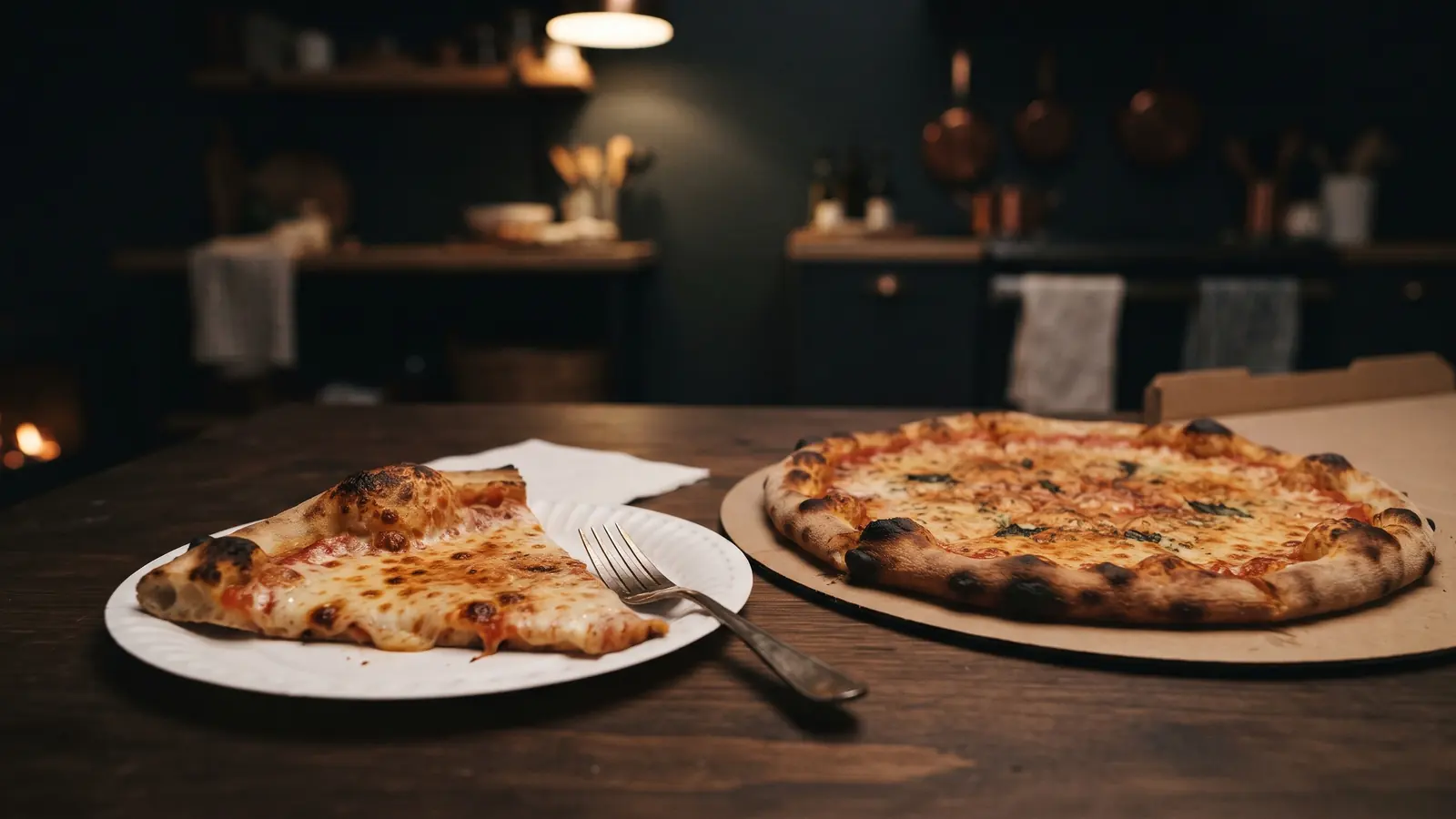
A New York style pizza crust should be thin but flexible: crisp on the bottom, tender in the middle and chewy in the edge, with enough strength to hold the slice flat in the hand until it is folded.
Experienced pizza eaters look for a few signs:
- The underside is dry and browned, often with small dark spots.
- The edge, called the cornicione, is soft and slightly airy but not thick.
- The slice bends when folded and the crust does not snap.
- The cheese and sauce sit on top without soaking through.
The crust is not meant to be as cracker-crisp as a very thin cracker-style pie or as soft as a Neapolitan pie. It lives between the two.
What flour makes the best New York crust?
The best flour for New York style crust is a high-protein bread flour or high-gluten flour with about 12 to 14 percent protein. More gluten means a dough that stretches thin and bakes up chewy.
All-purpose flour works if bread flour is not available, but the crust will be softer and less chewy. Flours labeled “high-gluten” are sold in bags at restaurant suppliers and some groceries. Whole wheat flour is not traditional and can be added only in small amounts.
Water makes up roughly 60 to 65 percent of the flour weight in many recipes, so a dough with 500 grams of flour uses about 300 to 325 grams of water. That is firm enough to handle and wet enough to bake a tender crumb.
How does a long ferment change the crust?
A long, cold ferment gives New York pizza crust more flavor, better browning and a dough that stretches without springing back. The yeast works slowly in the refrigerator, and enzymes break some starch into sugars that brown in the oven.
A typical schedule looks like this:
- Mix and knead the dough until smooth.
- Rest it for an hour, then divide it into balls.
- Place the balls in lightly oiled containers and refrigerate for 24 to 72 hours.
- Take the dough out two hours before baking so it relaxes to room temperature.
Dough that has been fermented only a few hours still makes pizza, but it tastes plainer and tends to be paler after baking.
How do you stretch the dough?
You stretch New York pizza dough by pressing it flat from the center, leaving the outer edge thicker, then stretching it over your knuckles or tossing it. Do not use a rolling pin, because it pushes out the gas that makes the edge puff.
- Dust the ball lightly with flour.
- Press from the middle outward with your fingertips, leaving about half an inch at the rim.
- Lift the dough and let gravity stretch it over the backs of your hands, rotating it.
- Place it on a floured peel, top it quickly and slide it into the oven.
If the dough keeps springing back, let it rest for ten minutes and try again. Gluten relaxes with time.
What temperature and oven setup works best?
New York style pizza bakes best on a hot surface at the highest oven setting, usually 500 to 550 degrees Fahrenheit at home, for about six to ten minutes. Commercial deck ovens often run hotter, so a slice shop bakes and reheats quickly.
| Setup | Temperature | Typical bake time | Result |
|---|---|---|---|
| Home oven with baking steel | 500 to 550 F | 6 to 8 minutes | Crisp base, chewy edge |
| Home oven with pizza stone | 500 to 550 F | 7 to 10 minutes | Crisp base, slightly paler |
| Home oven with sheet pan | 475 to 500 F | 10 to 14 minutes | Softer, less crisp |
| Commercial deck oven | 550 to 600 F | 6 to 9 minutes | Classic slice-shop crust |
Preheat the steel or stone for about an hour. A properly heated surface is the biggest improvement a home cook can make.
Why does New York pizza crust sometimes taste soggy or stiff?
New York pizza crust turns soggy when it is topped too heavily or baked on a surface that is not hot enough, and it turns stiff when the dough is too dry or overbaked. Both problems come from moisture and heat balance.
- Soggy: use less sauce, drain wet toppings and bake on a very hot steel or stone.
- Stiff or cracker-like: add a little more water, avoid rolling the dough and pull the pizza when the edge is golden rather than dark.
- Pale and flat: extend the ferment time or raise the oven temperature.
A slice that was reheated well will usually be crisper than the same slice eaten straight from the box.
What is the difference between New York crust and Neapolitan crust?
New York crust is crisper, firmer and more foldable than Neapolitan crust, which is soft, wet in the center and blistered at the rim. The flour, the oven and the pie size all differ.
| Point | New York crust | Neapolitan crust |
|---|---|---|
| Flour | High-gluten bread flour | Finely milled soft wheat flour |
| Bake | Several minutes in a deck oven | About 60 to 90 seconds in a wood-fired oven |
| Texture | Chewy and crisp | Soft, tender, wet center |
| Eating | Folded by hand | Knife and fork |
Neapolitan dough is usually mixed without oil or sugar, while many New York doughs include a little of both to help browning in a cooler oven.
What does the crust look like when it is done?
A finished New York crust is deep golden on the edge, speckled with dark spots underneath and flat enough to lie across the palm without sagging in the middle. These signs matter more than the clock.
Lift the pie with a spatula and check the base. It should be firm, evenly colored and release from the surface without sticking. If the base is pale, give it another minute on the lowest rack. If the rim is dark but the base is pale, the oven is hotter at the top than at the bottom, and moving the pie lower will even it out.
Let the pizza rest for about two minutes before cutting so the cheese sets and the crust finishes crisping.
What does Fascati Pizzeria say about its crust?
Google Maps describes Fascati Pizzeria in Brooklyn Heights as a thin-crust pizza shop that sells slices at a counter. The menu records a plain slice, pizza by the slice, a whole pizza and an anchovy slice. No flour, dough recipe or oven type is documented, so nothing is known about how its crust is made.
Prices are not published. Check the menu page and the hours and location page for what is recorded, and ask in the shop for current prices. This guide is independent and takes no orders.
Common questions
What flour is best for New York pizza crust?
Bread flour or a high-gluten flour, with roughly 12 to 14 percent protein. The extra gluten makes the dough elastic and chewy, so it stretches thin without tearing and holds a fold.
Why is my New York style crust too hard or cracker-like?
Usually the dough was rolled too thin, baked too long or has too little water. Keep hydration near 60 to 65 percent, stretch by hand and bake until just browned, not dried out.
Does New York pizza dough need a cold ferment?
It is not required, but most recipes use one. Resting dough in the refrigerator for one to three days builds flavor, improves browning and makes the dough easier to stretch.
Why does the slice droop at the tip?
The crust is thin and the slice is wide, so the unsupported tip bends. A well-made crust droops slightly and recovers when folded. A tip that snaps means the crust is too dry.
Can I make New York pizza crust in a home oven?
Yes. Preheat a baking steel or stone for about an hour at the highest setting, usually 500 to 550 degrees Fahrenheit, and bake the pie on it. Results are close to, though not identical with, a deck oven.
Planning a visit? Start with Fascati Pizza Brooklyn: address, opening hours, menu and directions in one place.
This article is general information from an independent guide, not from Fascati Pizzeria itself. For the store’s current details see hours and location.